Hevruta - Study of the Ten Sefirot
Study of the Ten Sefirot
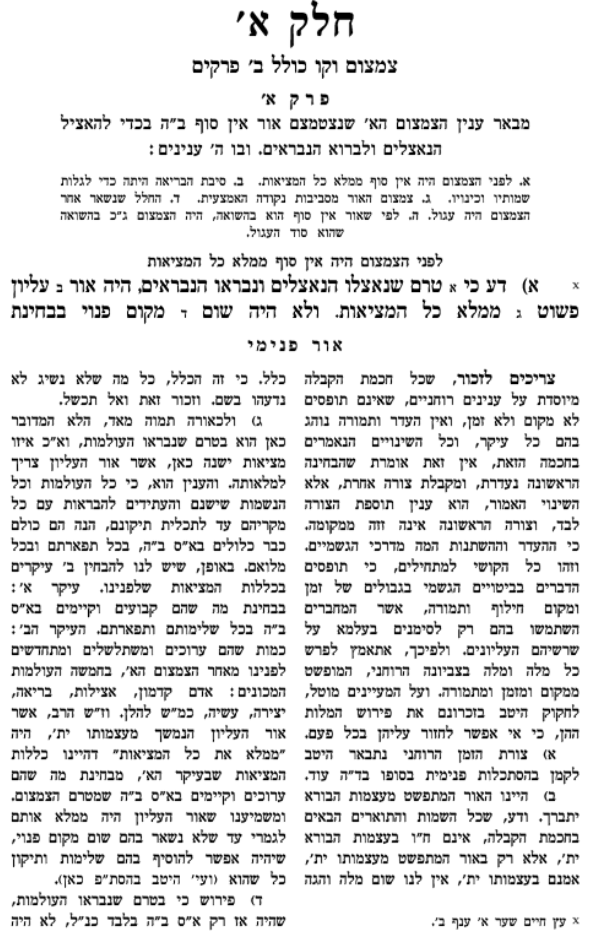
Baal HaSulam's manuscript of the "Table of Answers for the Meaning of the Words"
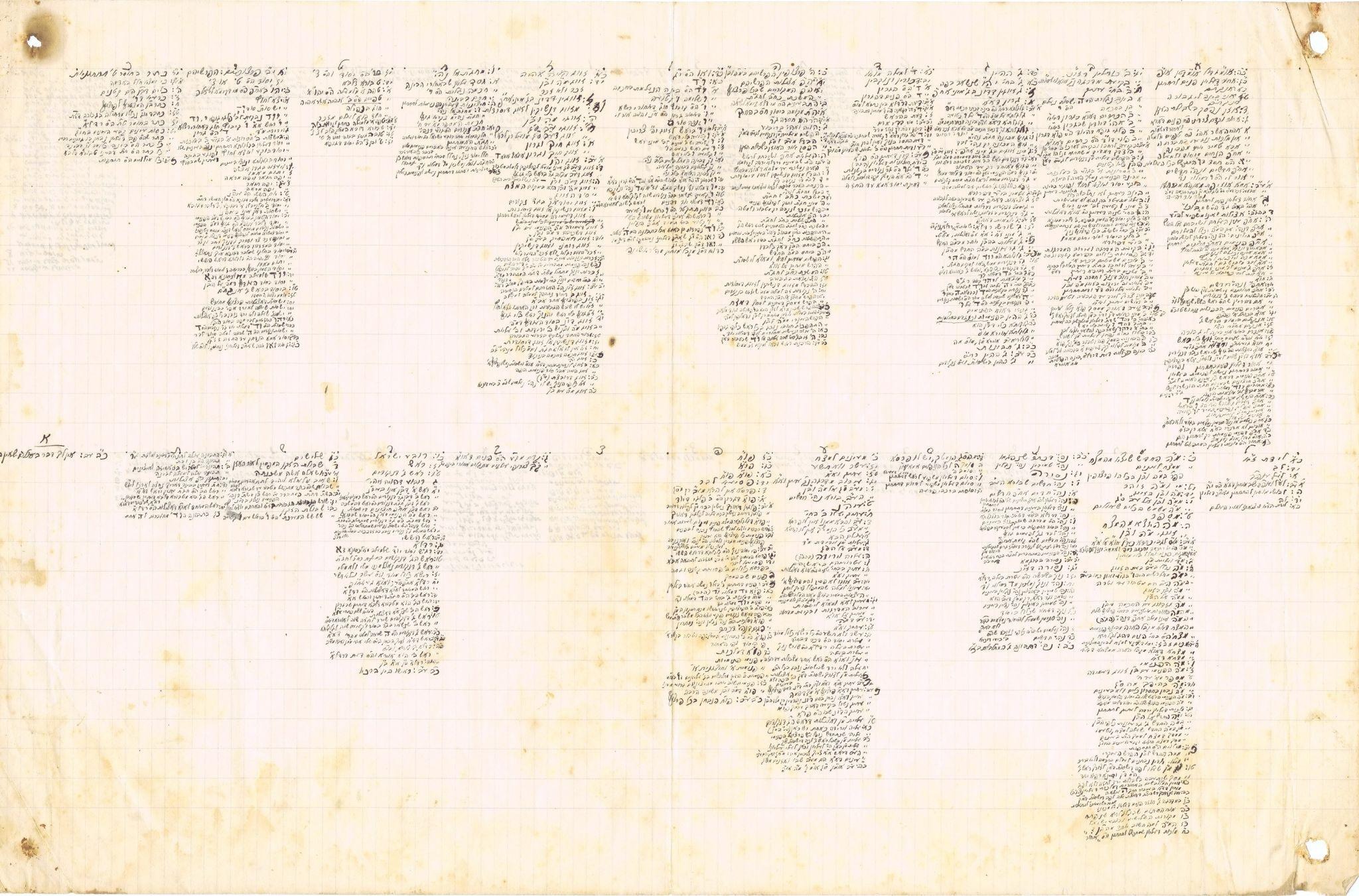
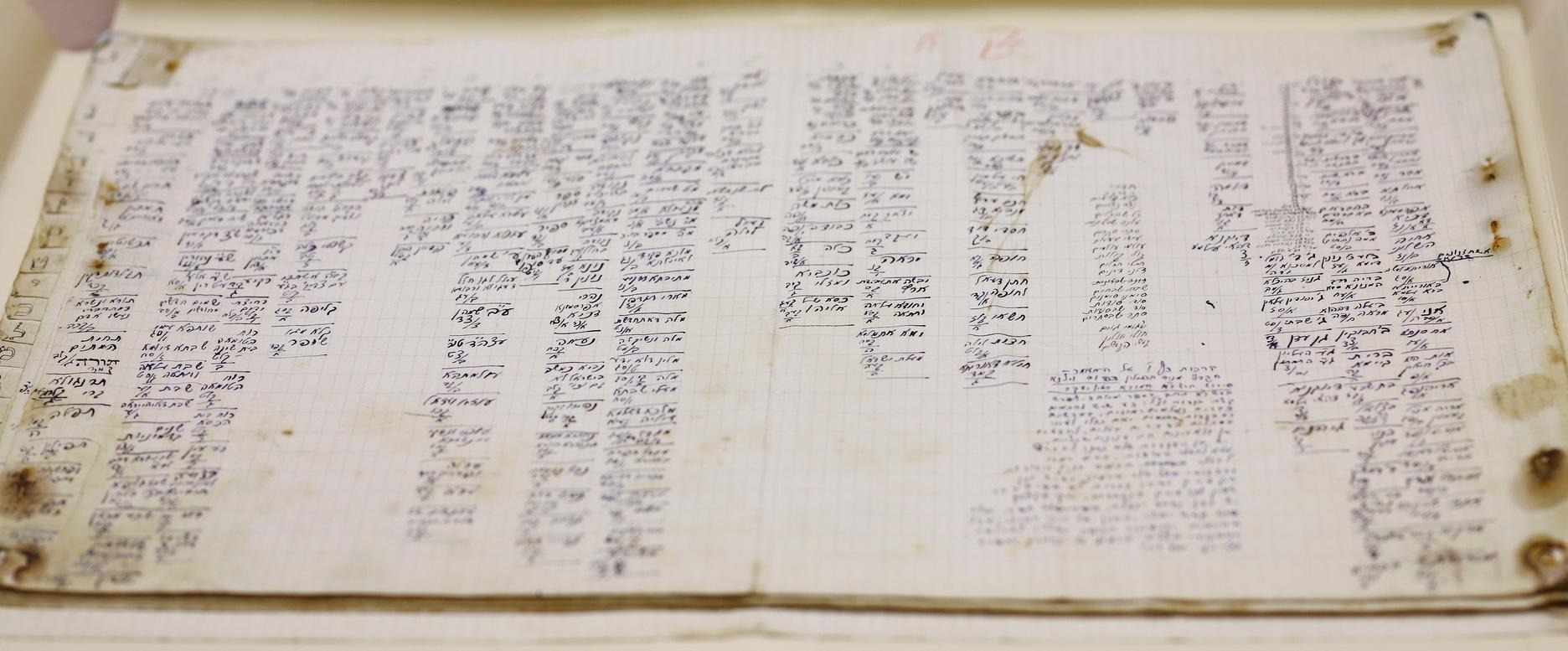
- Baal HaSulam's manuscript of the "Table of Answers for the Meaning of the Words"
The Study of the Ten Sefirot (Talmud Esser HaSefirot - abreviated Ta"aS in Hebrew) is the commentary of Baal HaSulam on the Tree of Life of the ARI.
In order to understand this major book, let's read first from the Introduction to The Study of Ten Sefirot that Baal HaSulam wrote:
155) Therefore, we must ask, Why then did the Kabbalists obligate every person to study the wisdom of Kabbalah? Indeed, there is a great thing about it, which should be publicized: There is a wonderful, invaluable remedy to those who engage in the wisdom of Kabbalah. Although they do not understand what they are learning, through the yearning and the great desire to understand what they are learning, they awaken upon themselves the lights that surround their souls.
This means that every person from Israel is guaranteed to finally attain all the wonderful attainments with which the Creator contemplated in the thought of creation to delight every creature. And one who has not been awarded in this life will be granted in the next life, etc., until one is awarded completing His thought, which He had planned for him, as it is written in The Zohar.
And while one has not attained perfection, the lights that are destined to reach him are considered surrounding lights. This means that they stand ready for him but are waiting for him to purify his vessels of reception, and then these lights will clothe the able vessels.
Hence, even when he does not have the vessels, when he engages in this wisdom, mentioning the names of the lights and the vessels related to his soul, they immediately illuminate upon him to a certain extent. However, they illuminate for him without clothing the interior of his soul, for lack of vessels able to receive them. Yet, the illumination one receives time after time during the engagement draws upon him grace from above, and imparts him with abundance of sanctity and purity, which bring him much closer to achieving his wholeness.
Meaning: we study about our inner roots, the root of our soul, and all the structure of the Souls because it help us draw the surrounding lights. Meaning our next state. How do we know that the surrounding light our next state, because we also need to know about the definitions of the terms so we can correctly understand what we are learning.
Let's see how Baal HaSulam continue this explanantion in his introduction.
156) Yet, there is a strict condition during the engagement in this wisdom not to materialize the matters with imaginary and corporeal issues. This is because thus they breach, “You shall not make unto you a statue or any image.”
In that event, one is rather harmed instead of receiving benefit. Therefore, our sages cautioned to study the wisdom only after forty years, or from a rav, and other such warnings. All this is for the above reason.
For this reason, I prepared the commentaries Panim Meirot and Panim Masbirot on Tree of Life in order to rescue the readers from any materialization. However, after the first four parts of these commentaries were printed and circulated among the students, I saw that my explanation was not as clear as I had thought, and all the great effort I had made to explain and elaborate in order to make the matters understood with ease was almost completely futile.
This happened since the readers do not feel the grave necessity to delve into the meaning of each and every word before them and repeat it several times until they remember it well wherever that word appears throughout the book. And by forgetting a word, they become confused about the matters since the subtlety of the matter causes the lack of interpretation of one word to blur the whole matter for them.
In order to correct this, I began to write the “explanation of the words” according to the alphabet, relating to all the words appearing in the books of Kabbalah and that require explanation. On one hand, I collected the commentaries of the ARI and the rest of the first Kabbalists concerning all that they said about that word. On the other hand, I explained the essence from all those interpretations and compiled a solid definition to explain that word in a way that suffices for the reader to understand it in each and every place he meets that word in all the real books of Kabbalah, from the first to the last. This is what I did with all the words used in the wisdom of Kabbalah.
I have already printed the words beginning with the letter Aleph [A], and some from the letter Bet [B], but only on one side. This is already close to one thousand pages. Alas, for lack of money, I stopped the work in its beginning and for nearly a year now I have not continued this important work, and the Creator knows if I will ever come to it, for there are many expenses and at the moment, no support.
For this reason, I have taken on a different path, as in “Better a sparrow in the hand…” and this is the book Talmud Eser Sefirot [The Study of the Ten Sefirot] related to the ARI. There I collect from the books of the ARI—and especially from his book Tree of Life—all the principal essays concerning the explanation of the ten Sefirot. I positioned them at the top of each page and made a broad explanation about it called Ohr Pnimi [Inner Light], and another explanation called Histaklut Pnimit [Inward Observation]. These explain each word and issue presented in the words of the ARI at the top of the page as simply and as easily as I could.
I divided the book into sixteen parts so that each part will be a specific lesson about a specific topic in the ten Sefirot. The Ohr Pnimi mainly clarifies the words of the ARI presented in that lesson, and the Histaklut Pnimit mainly clarifies the matter in general. On top of them, I set up a Table of Questions and a Table of Answers for all the words and matters presented in that part.
Once the reader finishes that part, he should test himself to see if he can answer correctly every question presented in the Table of Questions. After he answers, he should look at the answer relating to that question in the Table of Answers, to see if he has answered correctly. Even if he can answer the questions well by memory, he should repeat the questions many times until it is as though they are placed in a box. At that time, he will remember every word when he needs it, or at least he will remember its place in order to look for it, “and the will of God will succeed through him.”
The Order of Learning
Begin with learning the Panim [anterior/face], meaning the words of the ARI which are printed at the top of the pages, through the end of the book. Even though you will not understand, repeat them several times, as in “First learn, then understand.” Afterward, learn the commentary Ohr Pnimi, and exert in it in a manner that you can learn and thoroughly understand the Panim even without the help of the commentary. Afterward, study the commentary Histaklut Pnimit until you understand and remember all of it.
After all this, test yourself with the Table of Questions. Once you answered a question, look in the answer that pertains to that question. Do so with each and every question; learn and memorize them and repeat them several times until you remember them well, as though they are placed in a box, since in each and every word in the third part, we must remember well the whole of the first two parts, without missing even a tiny meaning. The worst of all is that the reader will not feel what he has forgotten. Rather, either matters have become unclear to him or he adopts a wrong interpretation of the matter because he has forgotten. Naturally, one mistake leads to ten mistakes until he comes to complete misunderstanding and will have to stop learning altogether.
Question: What is Light?
Answer: Everything in the worlds that exists as “existence from existence,” which is everything but the substance of the Kelim.
- Baal HaSulam. Study of the Ten Sefirot. Vol. 1. Part 1, Table of Answers for the Meaning of the Words
20. The light that expands from Ein Sof to the emanated being is called direct light. This light is tied to the emanated being by a clothing of reflected light that rises from the screen upward through a coupling by striking (this will be explained later). This is called attachment because this reflected light that rises from the screen of phase four, from the straight line, holds and captures the upper light in the circle.
Thus, in a place where the reflected light does not clothe the upper light, the emanated being regards it as absent, because it cannot attain it without this clothing called reflected light.
- Baal HaSulam. Study of the Ten Sefirot, Vol. 1, Part 2. Chapter 1, p.20
Lights

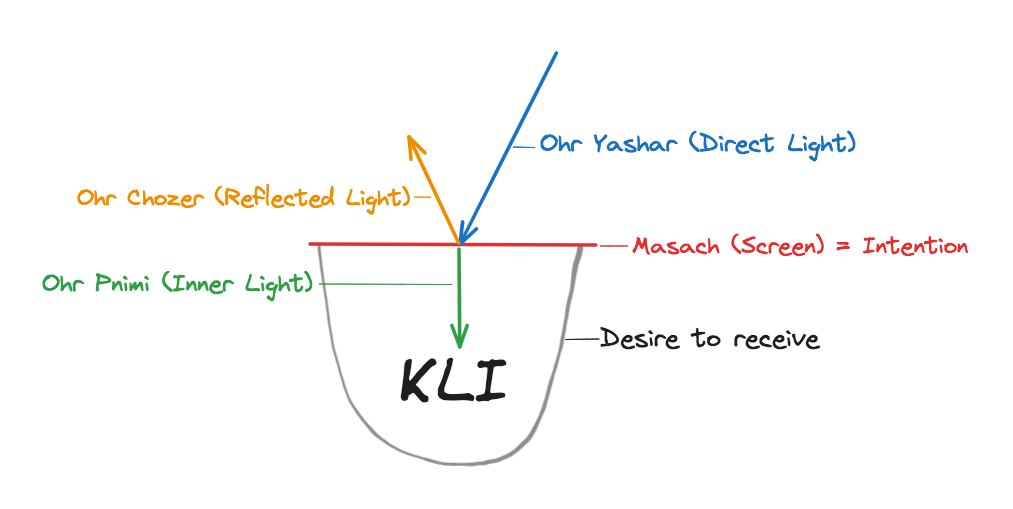
It is written in The Study of the Ten Sefirot (Part 2, Chapter 1, Item 3) that Ohr Hozer ascending from the Masach [screen] upward is called “connection” because it holds and captures the upper light in the Igul [circle] in a way that where the Ohr Hozer does not clothe the upper light, that light is regarded as nonexistent from the perspective of the emanated being because he cannot attain it without this attire called Ohr Hozer.
The answer is that where there is no clothing called Ohr Hozer, the upper light is regarded as nonexistent from the perspective of the emanated being, and because the whole meaning of the Ohr Hozer is that he receives only according to the intention to bestow, as long as one has not emerged from self-reception, he does not have this Ohr Hozer. Thus, although “The whole earth is full of His glory,” it is regarded as nonexistent from the perspective of the lower one.
- Rabash. Assorted Notes 557. Concerning Ohr Hozer [reflected light]
1. What is “light” (Part 1, Inner Observation, 18)
Everything in the worlds that exists as “existence from existence,” which is everything but the substance of the vessels (see Items 2 and 24).
2. What are “light and vessel” (Part 1, Chap 1, Inner Light, 6)
The will to receive in the emanated being is called “vessel,” and the abundance that he receives is called “light.”
3. What is “circular light” (Part 1, Chap 1, Inner Light, 100)
A light that makes no distinction of degrees.
4. What is “simple light” (Part 1, Chap 1, Inner Light, 30)
A light that contains within it the vessels, to the point that the light and the vessel are indistinguishable.
5. What is “light of Hochma” (Part 1, Chap 1, Inner Light, 50)
A light that is extended to the emanated being in the first expansion, which is all the vitality and self of the emanated being.
6. What is “light of Hassadim” (Part 1, Chap 1, Inner Light, 5)
A light that clothes the light of Hochma, and is extended to the emanated being with the first intensification.
7. What is “empty air” (Part 1, Chap 1, Inner Light, 5)
It is light of Hassadim before it is clothed on the light of Hochma.
8. What is “afterwards” (Part 1, Inner Observation, 34)
That which stems from its previous phase, see Item 20.
9. What is “middle” (Part 1, Chap 2, Inner Light, 2)
See item 39.
10. What is “one” (Part 1, Chap 2, Inner Light, 1)
The upper light that expands from His self is one and as simple as His self. As it is in Ein Sof, so it is even in the world of Assiya, without any change and addition of form at all; this is why it is called “One.”
11. What is “Creator” (Part 1, Inner Observation, 18)
The name Creator relates solely to the innovation, meaning the making of “existence from absence,” which is the substance of the vessels, defined as the “will to receive” in every essence. It was necessarily absent in His self prior to creation.
12. What is “Adhesion” (Part 1, Chap 1, Inner Light, 30)
It is equivalence of form that brings the spirituals closer and attaches them to one another, while disparity of form moves them away from one another.
What is “time” (Part 1, Inner Observation, 34)
It is a certain sum of phases that cascade from one another and are mingled in one another by an order of cause and consequence, such as days, months, and years.
Phase four in the desire, which was emptied of light, is regarded as darkness compared to the light. With respect to the vessel, she is regarded as a space, since phase four, in its self, was not deprived from the emanated being in itself by the restriction, but is there in it as an empty space without light.
What are “before and after” (Part 1, Inner Observation, 34)When speaking of a relationship of cause and consequence of the emanated beings, we express the cause by the word “before” and the consequence of that consequence by the word “after.” (see item 16).