Lesson 7. Freedom of Will
This lesson examines the concept of human freedom—its existence and scope. Explore the four factors influencing human development and the crucial role of our environment. Understand how a person's spiritual growth is intertwined with their surroundings. Unpack the meaning of the phrase, “everything is expected and permission is given,” and its implications for free will and destiny.
- Does a person have freedom of choice? And if so, in what?
- The four factors in the human developmental process;
- What is the role of the environment in which we live? What is the relationship between a person's spiritual development and the environment in which he lives?
- What does the phrase, “everything is expected and permission is given” mean?
Lesson 7. Freedom of Will
SLIDE #2
"Torah refers to the light clothed in the Torah, as our sages said, “I have created the evil inclination; I have created the Torah as a spice.” This refers to the light in it, since the light in it reforms him."
- Baal HaSulam, Shamati, “What Is Support in the Torah, in the Work?”
SLIDE #3
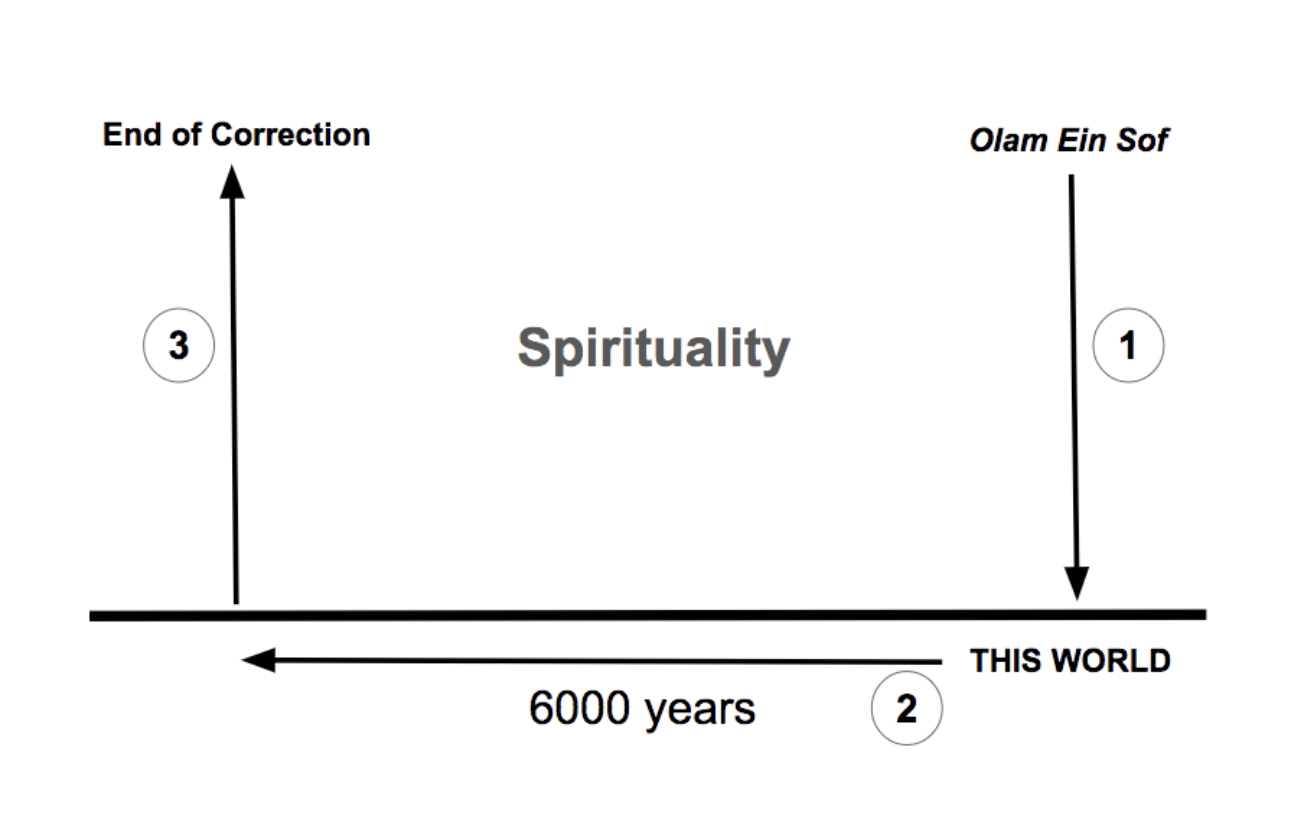
The Three Axis Model
SLIDE #4
Video Clip
SLIDE #5
Are we free?
Do we have a choice?
Can destiny be changed? In what…?
SLIDE #6
Video clip: Can the wisdom of Kabbalah help me change my destiny?
SLIDE #7
"However, when we examine the acts of an individual, we will find them compulsory. He is compelled to do them and has no freedom of choice. In a sense, he is like a stew cooking on a stove; it has no choice but to cook, since Providence has harnessed life with two chains: pleasure and pain.
The living creatures have no freedom of choice—to choose pain or reject pleasure."
- Baal HaSulam “The Freedom”
SLIDES #8-11
"And man’s advantage over animals is that man can aim at a remote goal, meaning agree to a certain amount of current pain, out of choice of future benefit or pleasure to be attained after some time.
But in fact, there is no more than a seemingly commercial calculation here, where the future benefit or pleasure seems preferable and advantageous to the agony they are suffering from the pain they have agreed to assume presently. There is only a matter of deduction here—where they deduct the pain and suffering from the anticipated pleasure, and there remains some surplus.
Thus, only the pleasure is extended. And so it sometimes happens that we are tormented because the pleasure we received is not the surplus we had hoped for compared to the agony we suffered. Hence, we are in deficit, just as are merchants.
And when all is said and done, there is no difference here between man and animal. And if this is the case, there is no free choice whatsoever, but a pulling force drawing them toward any passing pleasure and rejecting them from painful circumstances. And Providence leads them to every place it chooses by means of these two forces without asking their opinion in the matter.
Moreover, even determining the type of pleasure and benefit are entirely out of one’s own free choice, but follows the will of others, as they want, and not he. For example: I sit, I dress, I speak, and I eat. I do all these not because I want to sit that way, or talk that way, or dress that way, or eat that way, but because others want me to sit, dress, talk, and eat that way. It all follows the desire and fancy of society, and not my own free will.
Furthermore, in most cases, I do all these against my will. For I would be more comfortable behaving simply, without any burden. But I am chained with iron shackles, in all my movements, to the fancies and manners of others, which make up the society.
So tell me, where is my freedom of will?"
- Baal HaSulam, Articles, “The Freedom”
SLIDES #12-13
"Four Factors
Bear in mind that every emergence occurring in the beings of the world must be perceived not as extending existence from absence, but as existence from existence, through an actual entity that has shed its previous form and has robed its current one.
Therefore, we must understand that in every emergence in the world there are four factors where from the four of them together arises that emergence. They are called by the names:
- The source.
- The unchanging conduct of cause and effect related to the source’s own attribute.
- Its internal conducts of cause and effect which change by contact with alien forces.
- The conducts of cause and effect of alien things which affect it from the outside."
- Baal HaSulam, “The Freedom”
SLIDE #14
Factor #1 — “The Source”
- The essence underlying the entire process of human development.
- A unit of information that contains all the stages of a person’s future development.
- Our human foundation is the genetic inheritance we receive from our parents, their parents, and all previous generations.
SLIDE #15
Factor #2 - Attributes of the Source — Utterly Unchanging
- Each source is actually a collection of certain qualities intended to evolve from potential to actual.
- Some of these qualities cannot be changed; their development plan is predetermined.
SLIDE #16
Factor #3 - “Its internal conducts of cause and effect which change by contact with alien forces”
Each source also contains qualities whose development is not predetermined and can change over time, depending on the influence of the environment.
SLIDE #17
Factor #4 - External Factors
Another factor that shapes each person’s stages of development is the influence of external forces on the source.
For example, the state of the global economy or various social trends and fashions may affect how the tendencies we inherited from our ancestors develop.
SLIDE #18
Only in the matter of the choice of environment is man’s reign over himself measured, and for this he should receive reward or punishment.
- Baal HaSulam, “The Freedom”
SLIDE #19
...We can always add in the matter of choosing our environment, which are the friends, books, teachers, and so on. It is like a person who inherited a few stalks of wheat from his father. From this small amount, he can grow many dozens of stalks through his choice of the environment for his source, which is fertile soil that contains all the necessary minerals and raw materials that nourish the wheat abundantly.
- Baal HaSulam, “The Freedom”
SLIDE #20
There is also the matter of the work of improving the environmental conditions to fit the needs of the plant and the growth, for the wise will do well to choose the best conditions and will succeed. And the fool will take from whatever comes before him and thus turn the sowing to a curse rather than a blessing.”
- Baal HaSulam, “The Freedom”