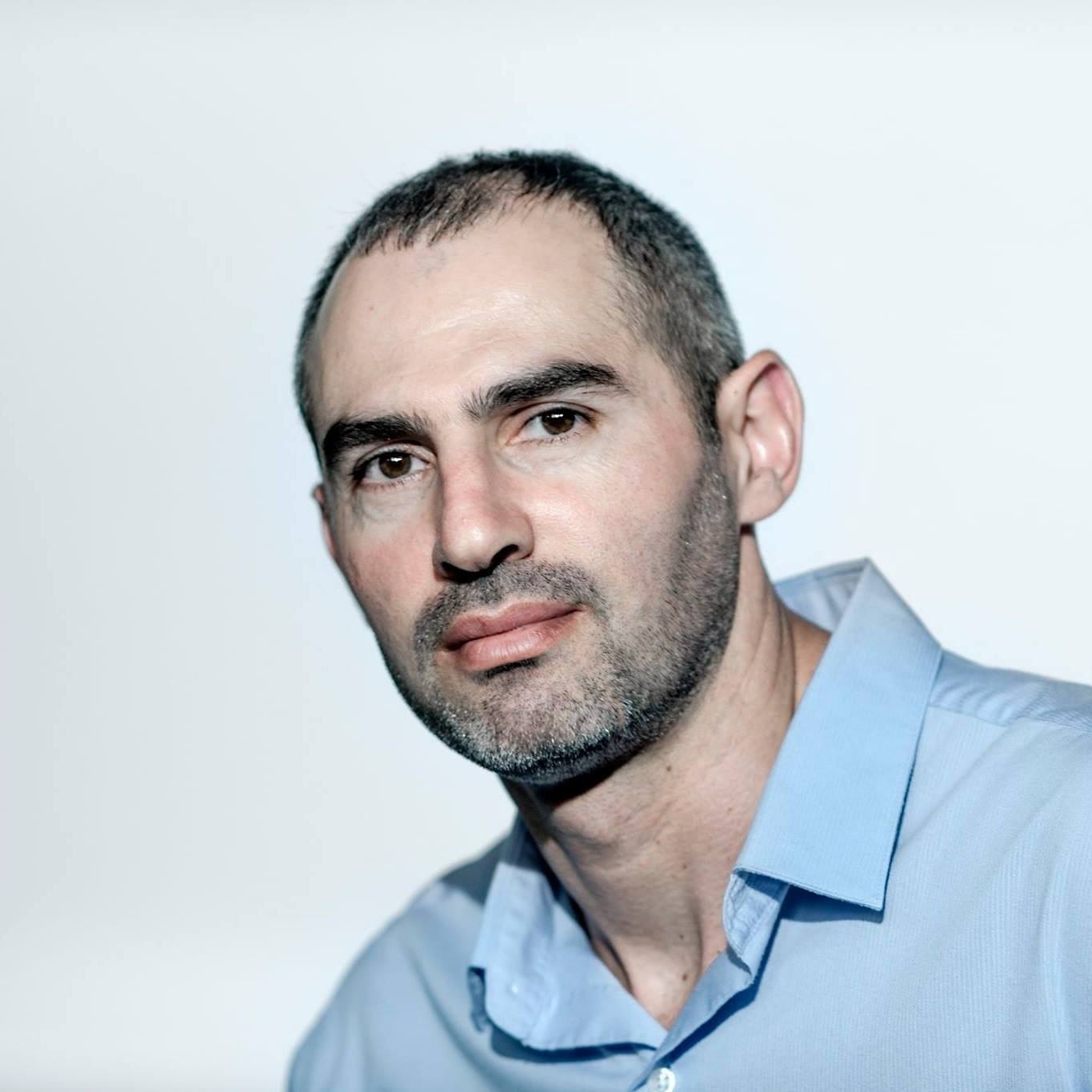
 Michael Sanilevich
Nov 15, 2026
Why Is Kabbalah Considered a Science?
Right now we're launching our new Global Campus course with 13,500 students from 147 countries, and thousands are joining us live right now for the very first lesson. The class is being broadcast in Hebrew and simultaneously translated online into 34 languages.
As we begin, we want you to understand this is not a passive lecture. We want your study to be interactive and experiential—so turn on your cameras, lean in, and ask questions.
Before we dive into the material, take one quiet minute right now and ask yourself: What brought me here? Why did I register for this course, and what do I truly want to attain? Write it down.
People come to Kabbalah for four main reasons:
- Curiosity about the deeper laws of reality.
- A quiet emptiness—everything in life looks fine on the outside, yet you don’t really feel anything.
- Exhaustion from the rat race—chasing goals every day without feeling genuine fulfillment.
- A personal crisis that shakes up everything you thought was certain.
On the surface, these four triggers look very different. Yet in the authentic wisdom of Kabbalah—which is not some instant formula for "getting light in five easy lessons"—all four share one single root. Kabbalists call it the point in the heart.
What is it? In Kabbalah, the sum of all our everyday, corporeal desires—our ways of seeking pleasure and fulfillment in this world—is called the "heart." Above those everyday desires lies a seed that exists within every human being, though it only awakens at a specific moment in a person's development. When it awakens, you begin yearning for something higher than corporeal life: a desire to understand the true essence and purpose of existence. That yearning is the point in the heart—and it is what brings someone to study.
Once that question awakens, we approach it not through blind faith, but through empirical investigation. In fact, one of the first questions I want to explore together today is simple: Why is Kabbalah a science?
Let’s put it to the test using the exact criteria that philosophers of science, led by Karl Popper, set for any true scientific discipline:
- Purity of Intention: Conventional scientists often depend on budgets and funding, which can steer research toward whatever is profitable. Kabbalists kept this wisdom concealed for thousands of years specifically so that no one could exploit it for personal gain.
- Reproducible Experiments: Natural science is limited to our five physical senses and the instruments that extend them. In Kabbalah, every student develops a "sixth sense"—an instrument of perception outside their own ego—and tests the exact same reality alongside others. It is much like putting on 3D glasses that suddenly reveal the same hidden picture to everyone in the room.
- Falsifiability: True science actively looks for where it might be wrong. Kabbalah advances in the exact same way—by discovering the "no," by identifying what does not work and correcting our approach.
- Elegance and Simplicity: Physics requires dozens of complex formulas to explain the laws of nature. In Kabbalah, the entirety of reality is built on just two foundational forces: Light (the force of bestowal and giving) and Vessel (the desire to receive).
- Peer-Reviewed Continuity: Modern science is roughly 400 years old. Kabbalah spans an unbroken chain of thousands of years, in which every Kabbalist empirically tests, validates for himself, and builds upon the discoveries of those who came before.
Beyond meeting these criteria, Kabbalah offers a complete framework of the fundamental laws governing reality. Just as physics studies the four fundamental forces of nature at the material level, the wisdom of Kabbalah explains the foundational forces operating on our world—revealing how they drive every process in our lives and in human society.
Ultimately, the true value of any science is measured by its purpose. Conventional science teaches us how to build a better ship. Kabbalah reveals where the ship is sailing—and who is standing at the helm. And that, by the way, is something you can only verify for yourself.