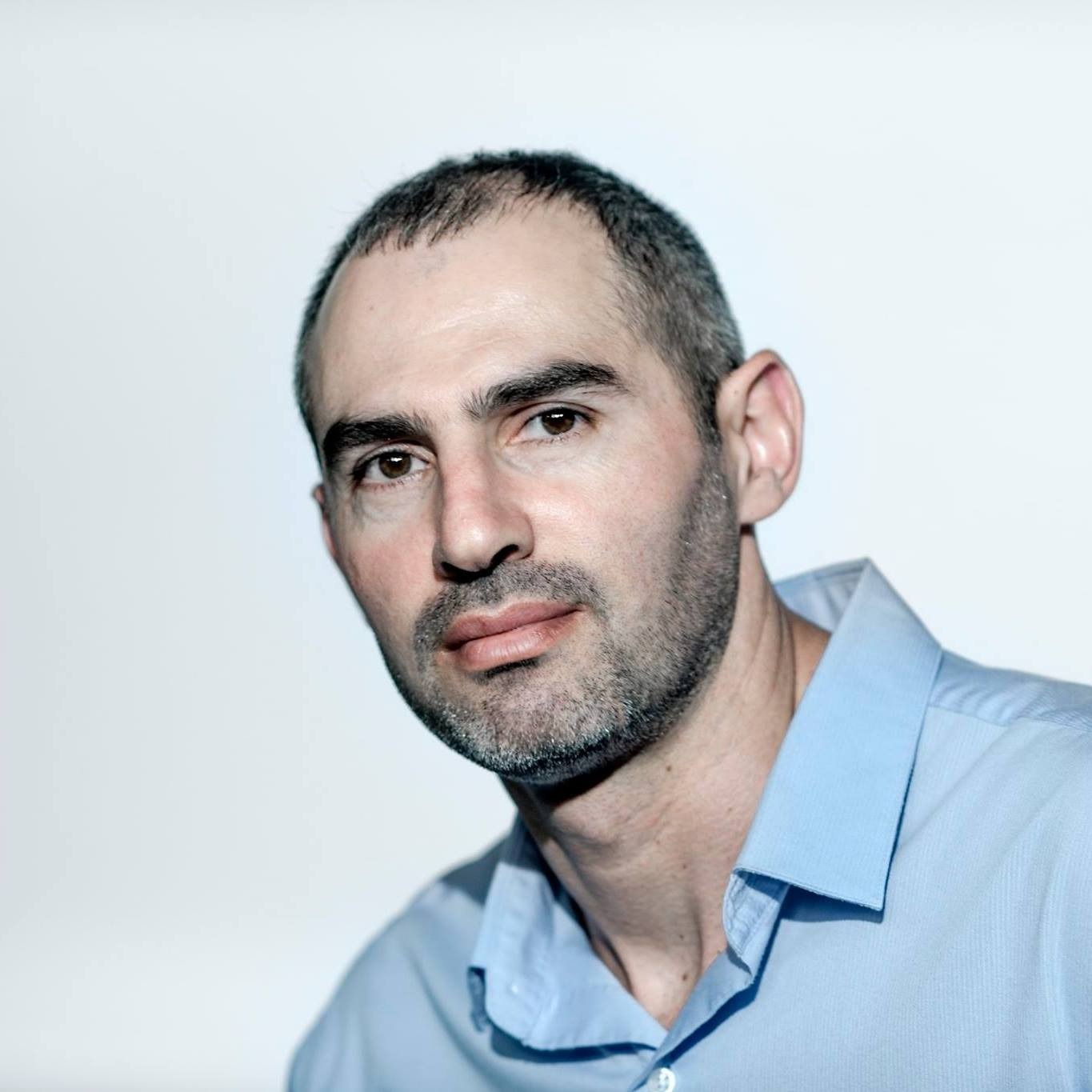
 Michael Sanilevich
Sep 16, 2026
Michael Sanilevich
Sep 16, 2026
Commemorating Rabash: The Final Days
 Rabash (Rabbi Baruch Shalom HaLevi Ashlag) 1907 - 1991
One day during the lesson, Miller came up to me and whispered: "Did you see?", pointing at the Rab’e. The Rab’e was sitting at the table, trembling.
"You know, this isn't the first time," he told me. I said to him: "I didn't notice, how is that possible?" I was very alarmed and realized that something had to be done urgently. These tremors stemmed from heart rhythm disturbances. As I understood later, it was an actual heart attack - he suffered a heart attack while standing on his feet and consciously said nothing.
I immediately called a doctor I knew; he arrived bringing an electrocardiograph with him. We performed an ECG test and the doctor told me: "We must go urgently to the hospital, something bad is happening to him, I'll ride with you."
We drove to Beilinson Hospital. I knew Rabash had a strong heart, but I never imagined one could recover from a heart attack within just a few minutes, within about an hour. He underwent another ECG test, this time at the hospital, and everything was fine. The test showed: the heart is completely healthy, the pulse is normal, the blood flow in the arteries is normal. Excellent results - his heart was beating like the heart of a child.
The doctors asked to discharge Rabash home, but I insisted that he remain hospitalized. I managed to convince them, and we stayed. At first, they transferred him to the cardiology department, and later to a general ward. In their assessment, there was nothing urgent there.
The doctors treated it as just another routine case: from their perspective, he was not a giant Kabbalist, the last of his generation. To them, he was just another 85-year-old man born in 1907 who had already been through a lot in his life.
I did not leave his bedside for two full days. I bathed him, changed his clothes, wrapped him in a blanket; I sat beside him the entire time.
In our room, there were about 6 to 8 patients, all elderly like him. One of them groaned continuously, and I decided to insist that they move Rabash to a separate room. But the Rab’e said to me: "There's no need, Michael, 'I dwell among my own people'... You can go on your way and relax, I will sleep now. I feel I am going to fall asleep. Go, come to me tomorrow morning as early as possible - I want to manage to put on tefillin." And then he took my hand and said: "Here, take the 'Shamati' notebook with you." He gave me his blue notebook, from which he was never parted. He placed it directly into my hands and said: "Take it and engage in it. And now, go."
I left.
I turned around to look back before leaving the room, and I saw how he raised his hand to wave goodbye. And so I walked out. I thought to myself: "Why did he give me his notebook? Why specifically now? What does he want to say by this?" I thought about it, but I didn't understand then that this was how he was parting from me. He gave me the most precious thing he had - what he had carried with him throughout his entire life, the notes of his father's words from which he was never parted.
When I recall those moments today, I cannot understand why I didn't stay, why I agreed with him. How did he manage to "put me to sleep" like that? And yet, I realize time and again that there was nothing I could have done, that everything is in the hands of the Upper One. That everything that is done, is done by Him, and that we are as nothing before Him - as nothing and nonexistence.
For some reason, the next day I was delayed at the lesson. Afterward, I drove home to pick up the oatmeal porridge that Olga had prepared for Rabash. He had asked for it to be milk-based without sugar. By the time I arrived at the hospital and entered his room, it was already six-thirty. I clearly remember the position of the clock hands I looked at then. It felt to me as though the hands of the clock had frozen in place.
I entered the room and saw Rabash lying in bed, curled up like a baby, his body turned toward the window. I immediately realized something had happened. I rushed over to him and listened to his breathing. He was barely breathing, choking, but no one cared, no one called for help, no doctors were summoned. Surrounding Rabash were only elderly patients; they didn't hear how Rabash was choking. He lay quietly without making a sound. I called out to him: "Rab’e, Rab’e," but he didn't answer. I ran to summon the doctors.
The doctor looked at him and immediately understood his condition. He asked me to step out into the hallway, but I refused. They brought the resuscitation machine and began attempts to restart his heart. As far as I remember, the doctors continued resuscitation efforts for about two hours. Despite my desire to remain by his side, I was asked to stand in the hallway.
I stood in the hallway and watched what was happening through the window. I saw how they worked. They really tried with all their strength. They didn't let go of him for a moment; they tried to impact his heart, injected something into his vein - I stood and watched it from the side. Slowly, I began to internalize that the person closest to me was passing away before my eyes. There is no one closer to me than him, and there never will be. Yet despite this, I was not seized by panic. He had prepared me for the day of his passing after all.
And so he passed away, without regaining consciousness.
The doctor came out of the room, walked up to me, drenched in sweat, and said: "That's it." I nodded in understanding. What happened afterward, I remember vaguely.
I called Olga, and after that Feige and Miller; they arrived quickly. Rabash's sons also arrived, as did many people from the study group. The entire hallway filled with students and relatives. I chain-smoked cigarettes.
They took Rabash to the morgue, the doctor handed me his watch, and that was it.
The funeral took place that very same day, Friday. In the HaModia newspaper, the following notice was published:
September 15, 1991: "At the conclusion of Rosh Hashanah, (Rabash) felt unwell and was rushed to Beilinson Hospital. His followers and admirers offered intense prayers for his recovery, but on Friday at 7:00 AM, he returned his soul to his Creator, while his sons Rabbi Shmuel and Rabbi Yechezkel, and his household confidant R' Michael Laitman, stood by his bedside."
Rabash was buried next to the Baal HaSulam on Har HaMenuchot in Jerusalem.
Those whom we managed to notify arrived at the funeral. I stood off to the side during the burial; I did not approach the grave itself. The burial process was directed by his family members. Afterward, we sat shiva; people came, left, many tears flowed, many words were spoken. During the shiva, I suffered from a spike in blood pressure - I was dazed, dizzy. I had never experienced blood pressure problems, yet now my blood pressure stabilized at 180/110. I was under immense internal strain, and it didn't surprise me.
I clearly remember how despite everything, despite all that happened, I was not seized by fear, I felt no panic. I was divided inside into two parts operating in parallel. In one part of me, there reigned the understanding that he had passed and the tension born of that understanding. While in my second part, there reigned a complete understanding that we were standing at the threshold of a new era.
I had been completely bound to him throughout the past 12 years. I was beside him from morning to night - if not physically, then in my thoughts. "I need to buy cheese for Rabash, he ran out of cheese. I need to drive him to the doctor, he didn't sleep properly. Olga prepared food for him, I need to manage to bring it to him before lunch. I need to talk to him about this and that, let me not forget" - he became my "second self." I was incapable of imagining life without Rabash.
In the initial period following his passing, I used to jump out of bed drenched in a cold sweat, look at the clock, and think I woke up too late. It's already nine-thirty, and I was supposed to be at his place at nine. And then suddenly I remembered that I wasn't actually late for anywhere, because I had nowhere to drive.
I would return to bed, close my eyes, and see him standing before me as if he were still alive and well.
The early period after his death was indeed difficult. It was very hard to drive in the car without him, for we had driven together so much. How hard it was to drive without hearing him say: "Michael, don't rush, I ask of you." He didn't like it when I drove over 90 km/h. "Michael, the windows need to be cleaned" - he liked the windows to be perfectly clean. "Michael, let's drive to Meron today," and we would drive to the tomb of Rashbi. And now, with whom will I drive?!
Yet despite it all, things somehow settled over time, precisely thanks to the work of my second part - the main part of me, the part where I felt he was completely with me. My teacher, my father, my friend left me - he left, but he also remained! As more time passed, I felt closer and closer to him. Rabash, after all, gave me his entire self; there was not a single minute in his life when he did something for himself. His entire life was directed in only one direction: away from himself toward others.
And he infected me with this orientation. I felt that he was pushing me forward. And that I had no other choice but to keep moving forward, along the path he mapped out, without deviating, without turning to other goals. I felt that I must continue to advance like him, to do everything in my power to convey to the world what Rabash so deeply wanted to convey to it - what he passed on to me. I felt that this responsibility rested on my shoulders in all its weight. I felt it then, and I feel it to this very day.
Everything that has happened with me from then on - it is all him, Rabash.
You have read the final chapter from the book "Always With Me," which tells the life story of Rav Dr. Michael Laitman alongside his teacher, Rabash.