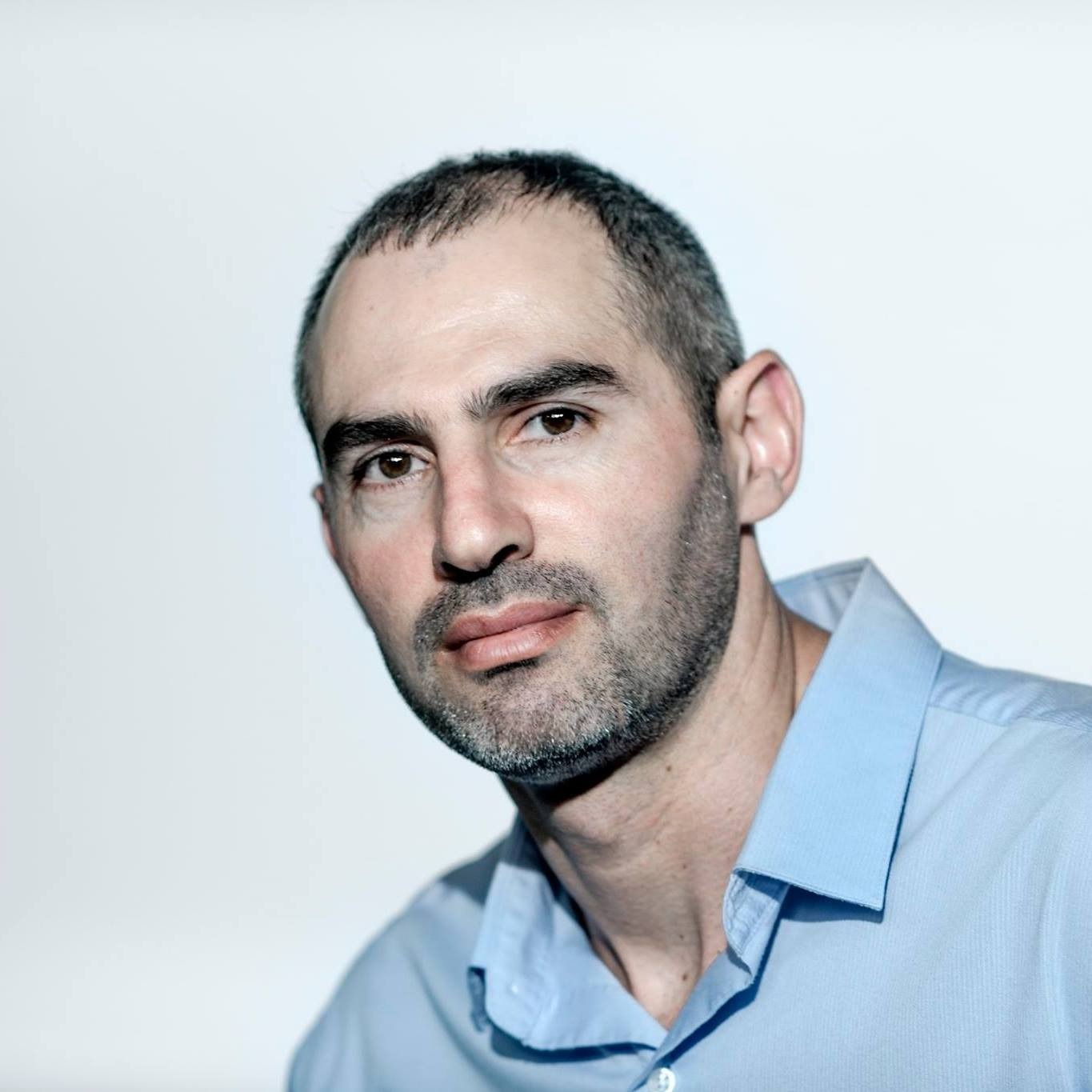
 Michael Sanilevich
Sep 27, 2026
Michael Sanilevich
Sep 27, 2026
Building a Vessel of Faith on Sukkot
Hello to all our dear friends. We're very happy to be here with you in this joyous holiday of Sukkot where we talk about building the Sukkah. Of leaving our permanent egoistic nature, and moving to a temporary dwelling. This entire week we'll have festive meals from 6pm to 6:45pm. We also have a very special Unity Day this coming Thursday.
We're preparing ourselves to get closer to the advanced concepts of Sukkot. We don't want to relate to them as tradition. For us students of the wisdom of Kabbalah, this holiday is always associated with a very deep and internal attack. We want to go into it as one man with one heart to awaken the light that reforms us.
We're going to read some very special excerpts that we gathered - written by Rabash and Baal HaSulam. We'll start with some direction from Rav about the internal process of Sukkot.
Clip: The Matter of Faith
I believe that through this study, we will come to understand the essence of the holiday of Sukkot - its customs, the reasons for our conduct, and what we stand to gain from this observance; in other words, the stage we are now called upon to reach. We have discussed how this involves building a vessel of faith that transcends the intellect - a concept hinted at by the construction of the s'chach (roof covering), which sits above our heads, obscuring the mind, and which we build ourselves.
We construct it using the waste products of the threshing floor and the winepress—materials we generally deem insignificant and of no practical use. This symbolizes the fact that we are dealing with matters that appear trivial or unimportant. Yet, this constitutes the commandment of faith—the power of faith—which often does not strike us as significant. "I believe"—what does it mean to believe? Especially in our times, who takes seriously someone who says, "I believe this is the case," or "I believe otherwise"?
For us, however, the power of faith is not merely the ordinary faith held by the average person; rather, it represents the power of bestowal. We seek to elevate this power of bestowal above the intellect. We aim to affirm that the power of giving and bestowal is superior to the power of reception, and to live our lives in accordance with this principle - through the power of faith, even a faith that transcends the intellect, or indeed, a faith that runs counter to it.
And the question arises: how can we achieve this? After all, "knowledge" refers to what I see and know; how can I possibly act against that? It seems unrealistic - impractical. Indeed, that is true - and the wisdom of Kabbalah treats people as serious individuals who rely on what their eyes can see. So, what does it mean, then, to acquire the power of faith? That is what we need to examine together.
Yet, this is the commandment: we must build within ourselves a vessel of faith. It means ensuring that everything we do is for the sake of bestowal, and that we exalt the greatness of the Creator above all else. It means beginning to value and regard others as greater than ourselves - where loving and bestowing upon others becomes more important to me than what I do for myself. In short, bestowal is more important than reception. Only in this way do we begin to sense that we can indeed attain a different perception of reality - one we previously had no interest in - and this is what is called entering the Upper World, or entering a vessel of bestowal. Michael Laitman
It's incredible to see the branches in our world expressing the roots - the schach that we build is made from garbage - it has not importance. These actually represent the attribute of bestowal that the masses disregard. And building the Sukkah actually represents building a man. The fact that we decided to become similar to the Creator - this actually happens in Sukkot - with the help of Ushpizin and the seven sfirot. And the anti-egoistic force of the screen that allows us to get closer to one another.
Sukkot is important because it's when we acquire a screen or faith above reason, which are above the force of our ego. Then that point of the human that we call the point in the heart - that's the part that we identify with and the main thing pushing us in life. And our will to receive becomes less important. So Sukkot symbolizes a shift in our priorities to the exact opposite where garbage is raised up. Our egoistic nature looks down on the attribute of bestowal. But simply trying to raise it up to a place of importance is called building the schach. We're coming out of the evil nature we were born with meaning our permanent dwelling, and switching to a temporary dwelling to acquire the attribute of bestowal. It's temporary because we can't keep that intention permanently in our current state.
RABASH, Letter No. 36
The thatch is the shadow of faith, called “faith above reason.” This is opposite to reason, for reason brings him into waste, to barn, and to winery.
That is, from the perspective of reason, the way the corporeal eyes see it, there is room for waste of barn and winery. This in itself makes a shadow, and he sits under it. That is, he makes for himself a seat out of all those lowest and worst things, and through the waste observes the Mitzva (commandment) of Sukkah.
Most importantly, he derives joy from this Mitzva because faith above reason is called “joy of Mitzva.” It follows that all the quandaries and questions that exist in reality are corrected in the Sukkah, for without them it is impossible to make a thatch.