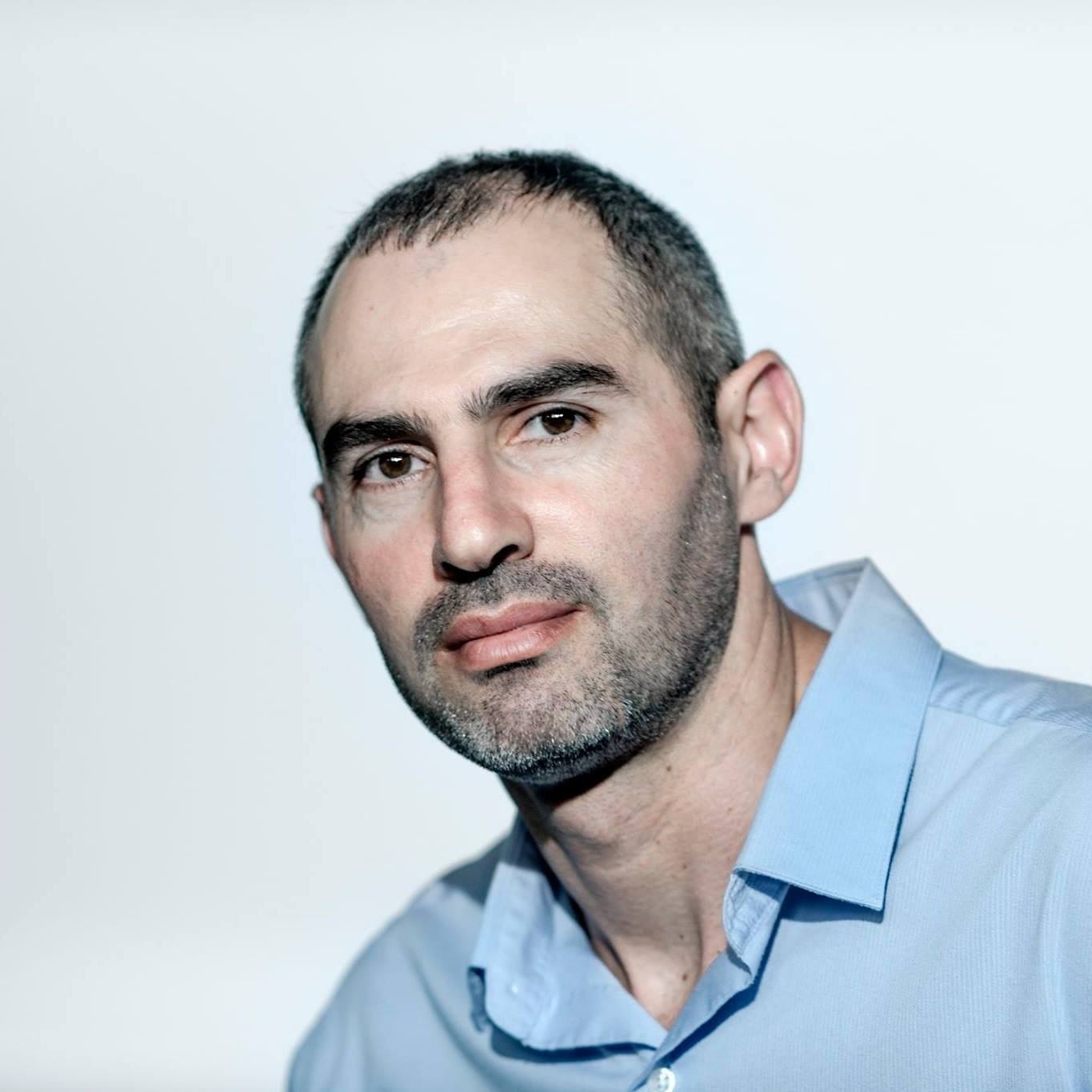
 Michael Sanilevich
Oct 26, 2026
A Party. From the Word Division. So What Actually Connects Us?
We are about to choose among dozens of political parties, each offering a different path, a different worldview, and a different solution to our problems. And that is perfectly fine. A healthy society can contain different opinions. Each of us has the right to think differently and to vote for whoever we believe in.
The problem begins when we lose the ability to see beyond our own opinion. When every disagreement becomes a struggle for our very existence, when each side is certain that only it is right, and when we no longer see a person who thinks differently from us as part of the society to which we belong.
Israel's problem is not the multiplicity of opinions. The problem is that there is no shared value above them that connects us.
In the past, it was easier for us to find what we had in common. We had to survive, establish a state, defend it, and build a life here. The shared challenges created a sense of belonging, even among people who were very different from one another. Right and left, religious and secular, new immigrants and veterans—we did not always agree, but there was something greater than the political argument that connected us.
Today, reality has changed. We are still facing security threats, and we must be strong, clear-eyed, and realistic. We do not have the privilege of ignoring the dangers around us.
But security alone cannot sustain a society over time. A strong economy, a good healthcare system, and a welfare state that cares for all its citizens are also necessary conditions, but they do not answer the deeper question: what makes us want to live here together?
We can build a strong army, develop advanced technologies, and achieve impressive economic accomplishments. But if within our society every group sees the other group as a threat, if we are engaged in a relentless struggle over the identity of the state, and if we have no basic trust in one another, no external achievement will be able to compensate for the internal fracture.
So why is it so difficult for us to give up even a little of our position?
Think of a family. Spouses can be very different in their opinions, their character, and the way they see the world. They do not have to agree on everything. But when both of them regard preserving the family as a supreme value, they are able to be flexible, listen, and sometimes also yield. Not because the other side won, but because the connection between them is more important to them than the particular argument.
By contrast, when each person sees only themselves and what they want to achieve, every disagreement becomes a power struggle. Every concession is perceived as a loss, and every compromise as a threat to personal identity.
Israeli society today lacks the very thing that enables a family to remain a family even when its members disagree: the recognition that the connection between us is more important than one side's victory over the other.
Rabbi Dr. Michael Laitman wrote about this in his article “Social Protests”:
“The condition for being a ‘people’ [...] is the bond of love between us. To be in mutual guarantee—‘as one man with one heart.’ To be responsible for one another and to live in equality as one big family.”
That is exactly the point. We do not have to think the same way in order to be one people. We need to feel that the connection between us is important enough for us to be able to argue, disagree, and oppose—without dismantling the society in which we live.
This connection does not require us to agree on how the state should be run. Nor does it demand that we give up our principles or pretend that there are no disagreements between us. It requires something else: to stop seeing everyone who thinks differently as an enemy, and to begin seeing them as a person to whom our future is also connected.
Our tradition contains a simple and profound expression: “Love your neighbor as yourself.”
This is not merely a beautiful moral idea or a slogan recited on holidays. It is a principle that can guide our shared life: developing mutual consideration, responsibility for one another, and an understanding that none of us can build a good future for ourselves over time when the society around us is falling apart.
In the approach to connection taught by our Rav, mutual guarantee does not require all of us to be identical. On the contrary. It allows us to remain different and nevertheless act out of concern for the complete human system of which we are a part.
This can also be seen as a social law of nature. We can ignore our mutual dependence, but we cannot abolish it. In a world where we all affect one another, the relationships between us are not a marginal matter. They are part of the conditions that determine whether we will be able to exist, develop, and prosper together.
The question is whether we will learn to take this dependence into account through understanding and choice, or whether we will continue to ignore it until reality forces us to change.
I do not think we should expect that tomorrow morning we will all think differently. Such a change does not begin with a new law, a new party, or another promise from a politician. It begins with the recognition that something fundamental is missing in the way we perceive our society.
We can begin with simple questions: Is there something more important to me than winning an argument? Am I capable of seeing the good of society even when it requires me to take into account people with whom I disagree? Are we prepared to build a society here in which not only our rights matter, but also our responsibility for one another?
These are not theoretical questions. The answers to them will affect how we conduct our disagreements, our attitude toward state institutions, the education we give our children, and the future we will be able to build here.
In the upcoming elections, each of us will put our ballot in the box. We will choose different parties, argue, and continue to hold our opinions.
But after the elections, regardless of the results, we will remain here together.
Therefore, perhaps the most important question is not only who will win the elections, but what we want to overcome together.
So beyond going to vote, let each person ask themselves:
What connects us beyond the need to survive here? And are we prepared to recognize that our ability to live together is no less important than the way we want to run the state?